After a storm
Roof replacement after wind and storm damage
Rhode Island's storm history is long. When a storm leaves a roof that is no longer worth patching, here is how a replacement usually unfolds.
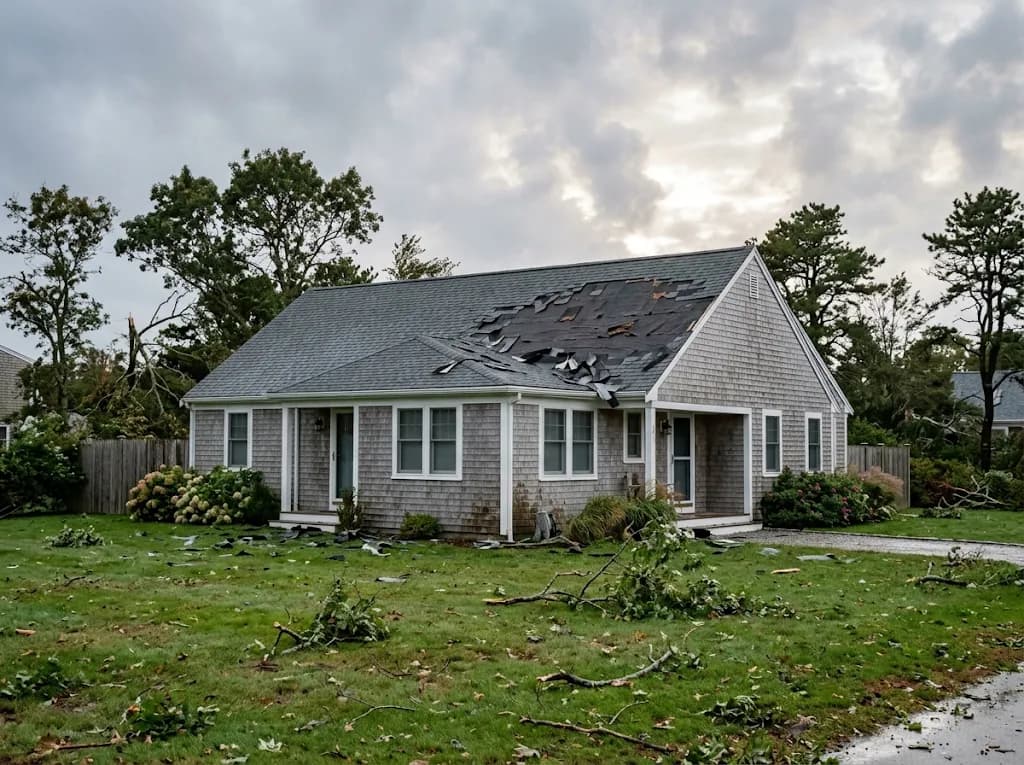
The storms Rhode Island remembers
The 1938 hurricane put downtown Providence under a storm tide of nearly 20 feet, according to the National Weather Service, and destroyed thousands of homes across southern New England. Hurricane Carol flooded the city again in 1954, which led to the Fox Point Hurricane Barrier, completed in 1966. In 1991 Hurricane Bob came ashore on Block Island and in Newport. Between those headline storms come the nor’easters that strip shingles and drop limbs most winters.
Signs the roof needs replacing, not patching
- Shingles missing or creased across several areas of the roof
- Torn underlayment or exposed decking
- A tree or large limb that broke through the deck or cracked rafters
- Water stains spreading in the attic or on top-floor ceilings
- An older roof whose remaining shingles have lost their seal and lift in every wind
What to do, in order
- Make the house safe and get any opening covered with a tarp. Keep receipts.
- Photograph every side of the house, the damage up close, and the attic and ceilings.
- Report the claim to your insurer and note the claim number and adjuster.
- Have a registered roofer inspect and document the roof.
- Compare the adjuster’s scope with the roofer’s findings.
- Sign a written contract only once you understand what the claim covers.
Storm damage on your roof? Talk with a local roofer about inspection and replacement.
Mon–Fri 8:30 am–7 pm · Sat 9 am–4 pm (Eastern)
Common questions
+Should I sign with the first roofer who knocks on my door after a storm?
No. Rhode Island's Attorney General has warned about door-to-door offers after storms. Check any roofer's registration with the Contractors' Registration and Licensing Board, get a written contract, and avoid anyone who wants cash or full payment up front.
+Will insurance pay for a whole new roof?
That depends on the policy, the extent of the damage and the age of the roof. Many policies treat wind damage differently from wear and tear, and coastal policies can carry separate wind or hurricane deductibles. Ask your insurer how your policy handles it.