Providence, Rhode Island
Roof replacement in Providence
A city of triple-deckers, Victorian streets and colonial hillsides, with local historic districts that cover thousands of properties.
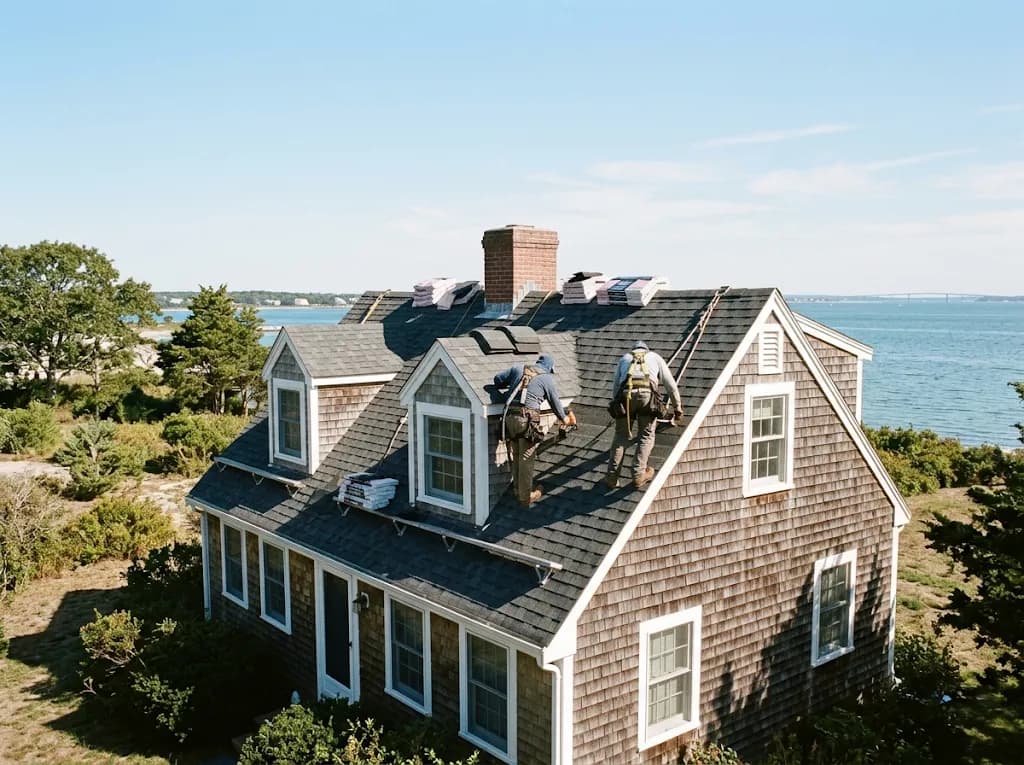
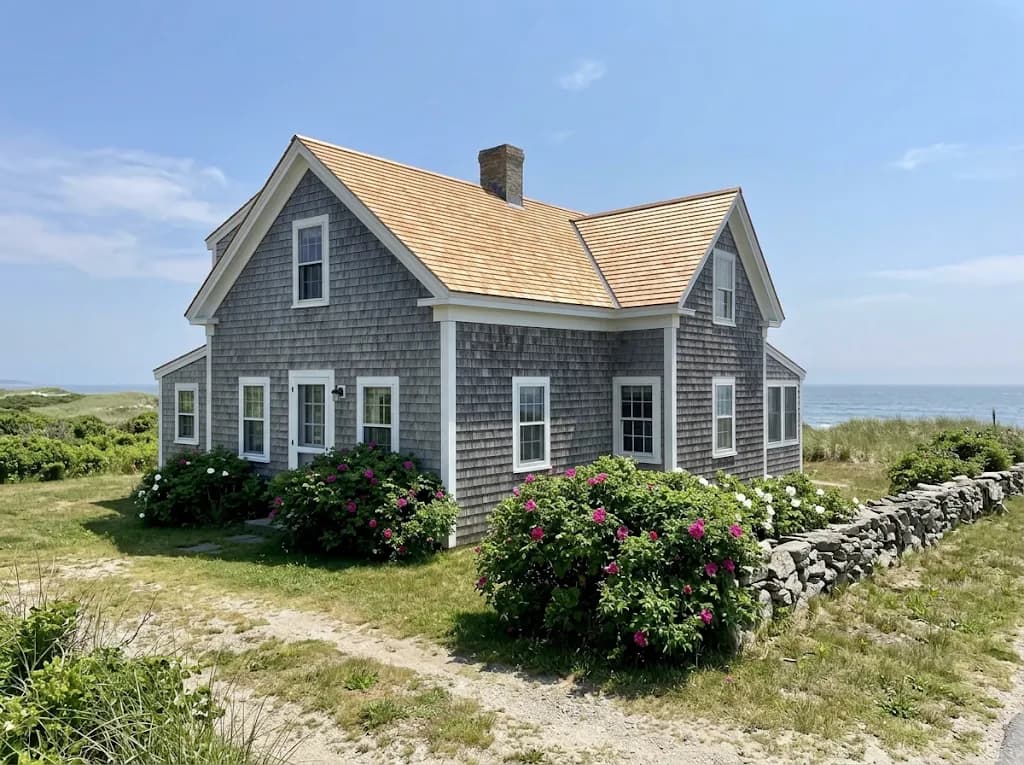
Background photo is illustrative.
- Peak triple-decker years
- c. 1900–1930
- Oldest local district
- College Hill, 1960
- 1938 storm tide downtown
- Nearly 20 ft
- Hurricane barrier
- Fox Point, 1966
The triple-decker city
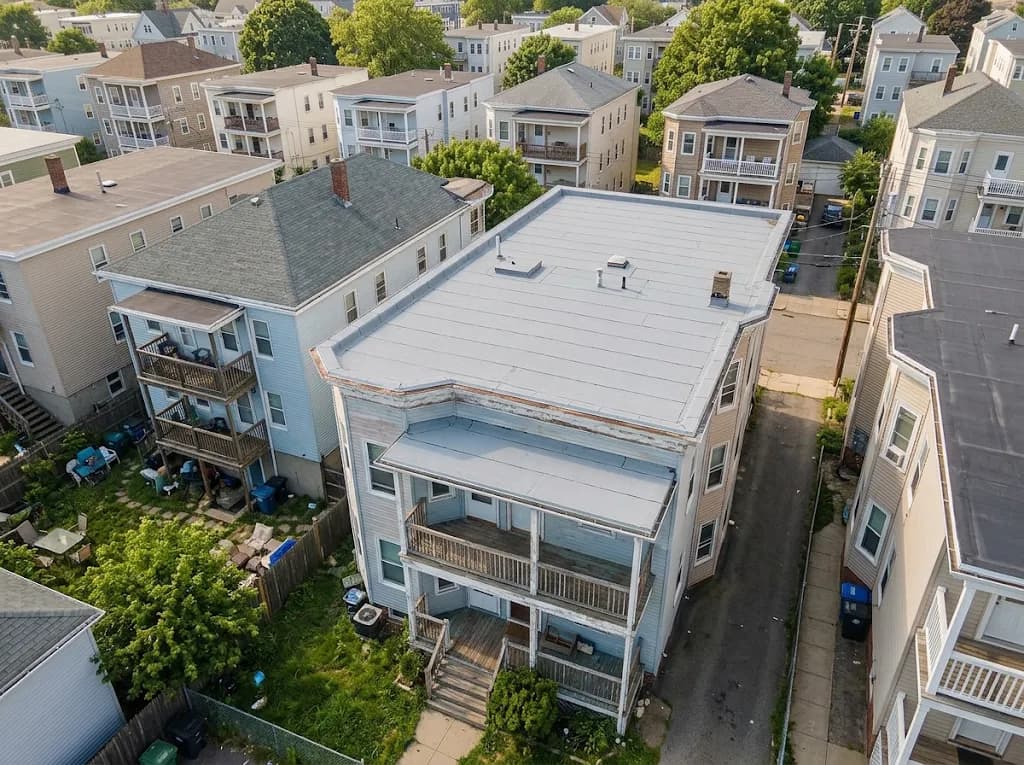
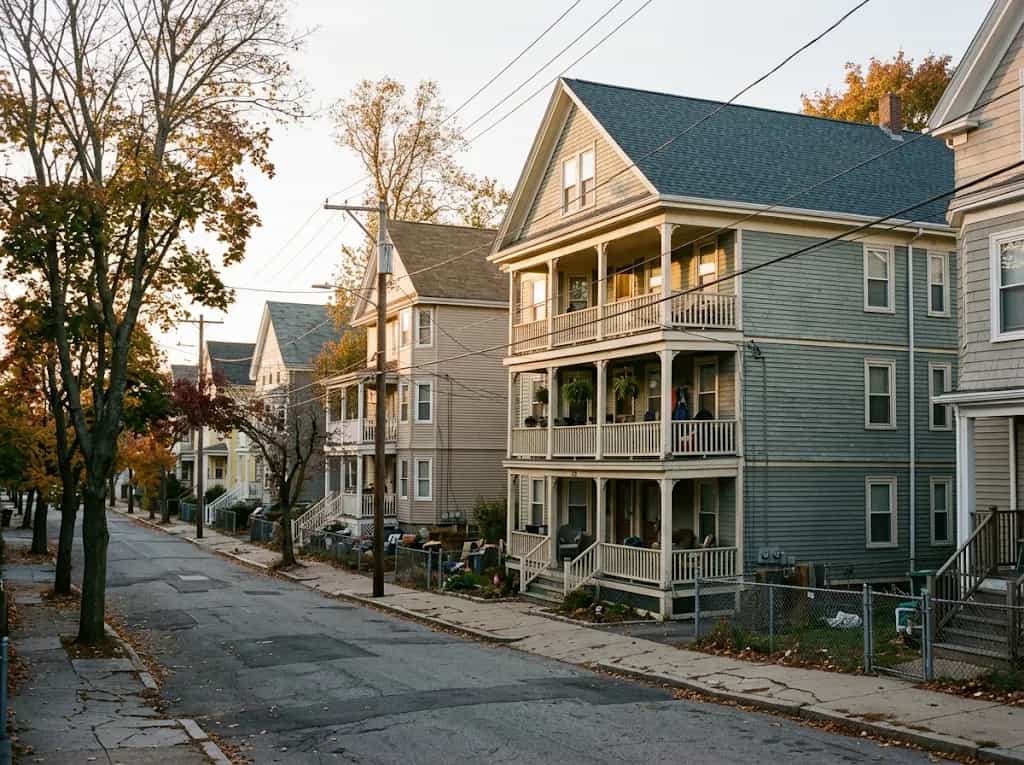
The National Register nomination for one Providence neighborhood calls the triple-decker the most common form of multi-family housing built in the city between about 1900 and 1930. Whole streets of them, like Oakland Avenue, are now on the National Register. Most have a low-slope roof behind a front cornice, plus stacked porches with roofs of their own. That makes Providence one of the busiest places in the state for membrane roof replacement.
Historic districts and your roof
The Providence Historic District Commission oversees exterior changes in the city’s local historic districts, which the city says contain roughly 2,600 properties. College Hill became a local district in 1960 and was expanded in 1990; the Armory district was designated in 1989 and expanded in 2004, and now includes around 500 properties. Other districts have included Broadway, Downtown, Northern and Southern Elmwood and Stimson Avenue.
If your house is in one of them, plan the material choice around the commission. Our historic district guide walks through the steps.
A city shaped by two hurricanes
The 1938 hurricane drove a storm tide of nearly 20 feet into downtown Providence. Hurricane Carol flooded the city again in 1954, and the Fox Point Hurricane Barrier was completed in 1966 to keep the next surge out. It has been closed for Hurricane Gloria in 1985, Hurricane Bob in 1991 and Superstorm Sandy in 2012. The barrier protects downtown from water, not roofs from wind, so wind-resistant edges and nailing still matter on every replacement here.
Working on dense streets
- Dumpster placement and any street-use permit need planning on narrow streets.
- Neighboring houses are close; ask how the crew protects them and their cars.
- Tenants on top floors need notice about noise and access.
- Chimneys on older houses often need new flashing, and sometimes masonry work first.
Own a house or triple-decker in Providence? Talk with a roofer who works in the city.
Mon–Fri 8:30 am–7 pm · Sat 9 am–4 pm (Eastern)
Providence roof questions
+Does the Providence Historic District Commission have to approve my new roof?
If your house is inside one of Providence's local historic districts, exterior work visible from the street, such as a change of roofing material, generally needs the commission's approval. Like-for-like replacement is usually simpler. Check the city's district maps before choosing a material.
+Who issues roofing permits in Providence?
The city's building inspection office issues building permits for roof replacement. Agree in writing with the roofer on who will pull the permit.
+Can one roofer handle the main roof and the porch roofs of a triple-decker?
Yes, and it is usually better that way. Mention the porch roofs when you call so they are included from the start.