Roof replacement
Asphalt shingle roof replacement in Rhode Island
The most common roof in the state, on everything from Warwick ranches to Cranston Colonials. Here is what a full replacement should include when the house sits in hurricane country.
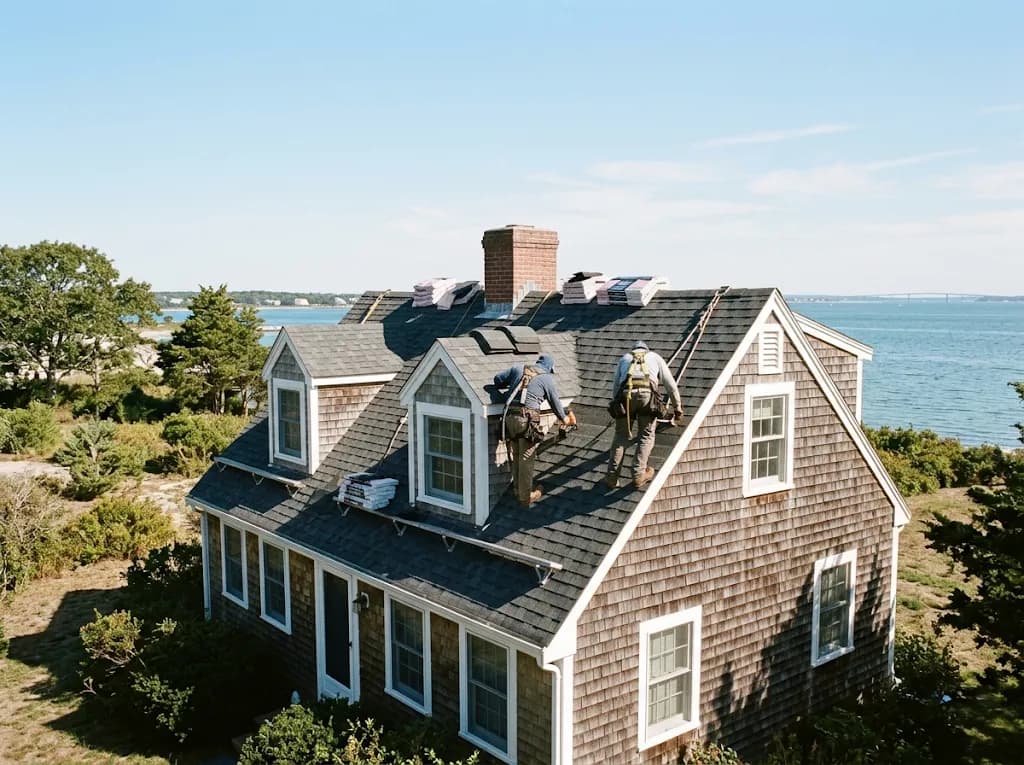
Start from the deck
A full replacement removes the old shingles, underlayment and flashing down to the roof deck. On older Rhode Island houses that deck is often wide boards rather than plywood, and it may carry two layers of old roofing. Once it is bare, the roofer can replace soft or rotted sections around chimneys, valleys and eaves, and add new sheathing over gapped boards if needed. Any extra decking work should be written into the contract as a change.
Edges are where wind wins or loses
Hurricane Bob made landfall twice in Rhode Island on August 19, 1991, first on Block Island and then in Newport, and more than 60 percent of people across southeastern Rhode Island and southeastern Massachusetts lost power. Most roofs that fail in wind fail at the edges first. On a replacement, ask about:
- Starter strips with factory sealant along the eaves and rakes, so the first course is glued down
- High-wind nailing, with the nail count and placement the shingle maker specifies for high-wind areas
- Drip edge fastened tightly along every edge, with the eave membrane lapped correctly over or under it
- Ridge cap shingles made for the ridge, rather than cut-up field shingles
Underneath the shingles
Ice-barrier membrane goes along the eaves and in valleys; Rhode Island gets less snow than inland New England, but ice dams still form on poorly ventilated houses. Synthetic underlayment covers the rest of the deck. New step flashing goes in where roofs meet walls, and chimneys get new counter-flashing let into the mortar joints.
Before you sign
Check the roofer’s registration with the Contractors’ Registration and Licensing Board (see how to check) and agree in writing on who will pull the building permit.
Shingles curling, missing or streaked? Talk with a roofer about a full replacement.
Mon–Fri 8:30 am–7 pm · Sat 9 am–4 pm (Eastern)
Common questions
+What is high-wind nailing?
Shingle makers publish a standard nailing pattern and a high-wind pattern that uses more nails per shingle. On exposed houses near the bay or the ocean, ask the roofer to use the high-wind pattern and the starter strips the manufacturer specifies for it.
+Why do Rhode Island roofs get black streaks?
The dark streaks on north-facing and shaded slopes are usually algae, which thrives in humid coastal air. Many shingle lines now include copper granules that resist it. Ask for an algae-resistant shingle if your old roof was streaked.
+Can new shingles go over my old ones?
The residential code allows a second layer only in limited cases, and never over two existing layers. Most roofers in the state recommend a full tear-off so the deck can be checked and the eave membrane can go directly on the wood.
Keep reading
- Checking a roofer's CRLB registrationWhat Rhode Island's Contractors' Registration and Licensing Board record tells you.
- Roof replacement permits in Rhode IslandStatewide code, local building officials and who pulls the permit.
- New roofs in Providence historic districtsWhen the Providence Historic District Commission has a say in your roof.